
When Politics Stops Asking Questions

From Facebook post :
(Adam Martin Independent - My Thought for the Day 29.05.2026)
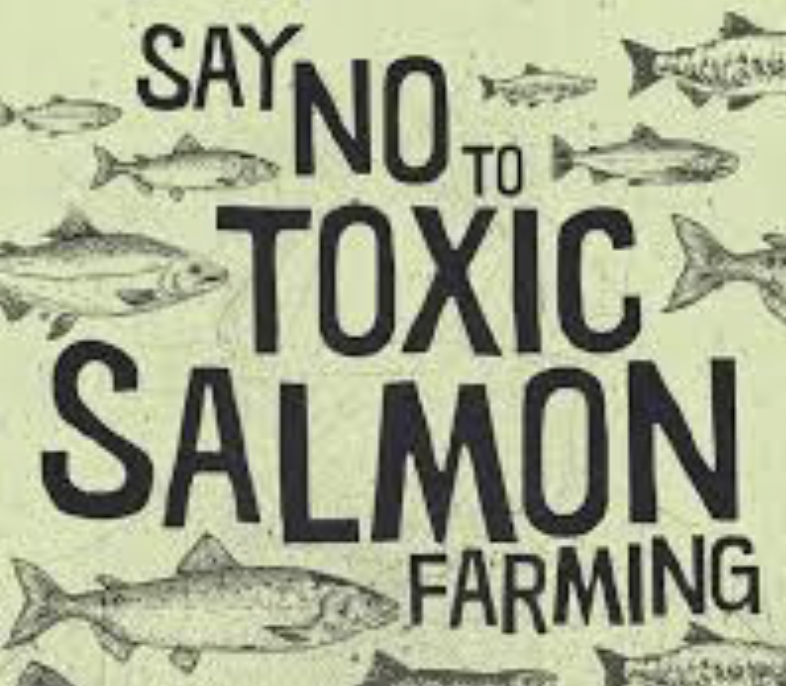
Yesterday in Tasmania’s Parliament, “Lobbyist Shane Broad” gave what was supposed to sound like a calm and rational defence of the salmon industry’s antibiotic use. Instead, many listeners heard something else entirely. They heard a politician so determined to defend the industry that he appeared more interested in dismissing legitimate questions than seriously engaging with them.
At one point, Lobbyist Shane Broad suggested critics “don’t understand how science works.” It was a revealing line because it exposed the central problem with this entire debate. The growing concern around antibiotic resistance is not coming from random conspiracy theorists or social media outrage. It is increasingly coming from medical professionals, scientists and researchers raising concerns about how humanity interferes with extremely complex evolved systems.
One increasingly discussed scientific position is that humans repeatedly introduce foreign agents and industrial pressures into natural systems we only partially understand, while assuming there will be no serious long-term consequences. History suggests otherwise. Sometimes the damage takes decades to fully emerge because ecosystems, bacteria and biological systems are deeply interconnected in ways we do not fully appreciate until problems become extremely difficult to reverse.
History is filled with examples. Pesticides once considered safe later devastated ecosystems. Cane toads were introduced to solve one problem and created another. Rivers have been over-extracted until ecological collapse followed. Antibiotics themselves transformed medicine, but decades of overuse eventually contributed to resistant bacteria emerging across the globe.
Scientists developed concepts like the precautionary principle precisely because of this reality. The precautionary principle is not anti-science. It is science acknowledging uncertainty and recognising that once damage occurs inside complex systems, reversing it can be extraordinarily difficult or impossible.
That is what makes Lobbyist Shane Broad’s speech so strange.
Nobody is claiming Tasmania’s salmon industry alone will create global superbugs overnight. That is a convenient strawman argument. The real concern is cumulative pressure. Repeated antibiotic use in increasingly stressed environments may contribute to resistance pressures building slowly over time. That is why many medical professionals are now asking why Tasmania still does not appear to have formal antimicrobial resistance gene surveillance around intensive aquaculture operations.
Importantly, these concerns are no longer coming only from environmental activists. Retired doctors, medical specialists and researchers are increasingly entering the discussion. Monash University research identified antimicrobial resistance genes and antibiotic-resistant bacteria in Australian supermarket salmon products. EPA monitoring also found oxytetracycline residues remaining in marine sediment long after treatment events had occurred.
These are not imaginary concerns invented by political opponents. They are legitimate scientific and medical questions deserving mature discussion.
But instead of engaging seriously with those questions, Lobbyist Shane Broad chose to ridicule the people asking them. Tasmanians are increasingly noticing a broader pattern emerging. For months now, Lobbyist Shane Broad has often sounded less like an independent scientific thinker and more like a public relations defender for multinational salmon corporations. The community is increasingly asking a fair question. At what point does advocacy for an industry begin looking more like loyalty to the industry itself?
Because this debate is no longer just about dead fish or ugly pens sitting in scenic waterways. It is increasingly about who benefits financially from Tasmania’s publicly owned waterways while the public carries the long-term ecological risk.
This becomes even more uncomfortable when compared internationally. Norway, which also operates one of the world’s largest salmon industries, introduced substantial resource taxation arrangements because Norwegians recognised something simple. Salmon companies are profiting from access to publicly owned fjords and marine ecosystems, so the Norwegian public deserves a meaningful return from the extraction of that natural wealth.
Tasmania, meanwhile, has allowed multinational salmon companies to operate within publicly owned waterways for years while paying comparatively little for access to the resource itself.
Even more concerning is the growing scuttlebutt now circulating around parts of the industry and broader policy circles. Increasingly, insiders quietly suggest the long-term strategy may simply be to extract as much value as possible while conditions remain commercially viable. As warming waters and climate pressures intensify, some fear parts of Tasmania’s marine farming zones may eventually become environmentally or commercially unsustainable anyway.
If that proves true, Tasmanians may eventually be left asking a brutal question. Did we allow publicly owned waterways to be degraded for decades so multinational corporations could maximise profits before walking away from a damaged ecosystem?
That question sounds harsh, but it is precisely why precaution matters. Once ecological systems begin unravelling, governments rarely restore them quickly. Communities carry the consequences long after executives, lobbyists and politicians have moved on.
This is why Peter George’s response in Parliament resonated with many people. His line about being “savaged by a dead salmon” landed because underneath the humour sat a deeper truth. Many Tasmanians are becoming exhausted by politicians who dismiss legitimate public concern as ignorance while simultaneously demanding absolute trust in regulatory systems that repeatedly appear reactive rather than precautionary.
The public is not demanding perfection. Most people understand industries carry risk. What people are demanding is honesty, transparency and a government willing to ask hard questions before the damage becomes irreversible.
That is not anti-science. If anything, it is exactly what good science is supposed to do.


Comments